Fantasy reader guide
13 Best Fantasy Books With Political Intrigue
The best fantasy books with political intrigue, ranked for adult readers by the kind of politics they offer, from dynastic conflict and court maneuvering to clan rivalry, government, espionage, and empire.
Guide lens
Help adult fantasy readers choose a political fantasy book by distinguishing dynastic conflict, court intrigue, governance, institutional power, war, espionage, romance, and reading commitment.
Quick answer
The recommendations at a glance
The order combines editorial judgment, Matrix distinctions, commitment, and the specific reader each book serves best.
Scan all 13 recommendations
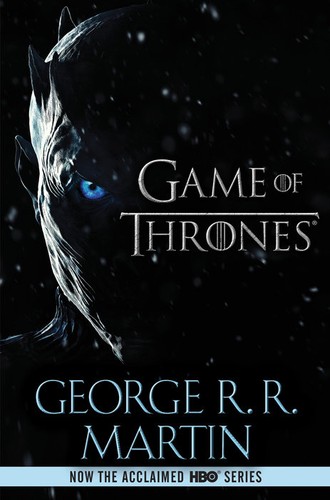
- #1A Game of ThronesGeorge R. R. Martin / A Song of Ice and Fire
- Best if
- you want dynastic conflict, several credible factions, fragile alliances, and political decisions that permanently alter the story.
- Commitment
- Long series
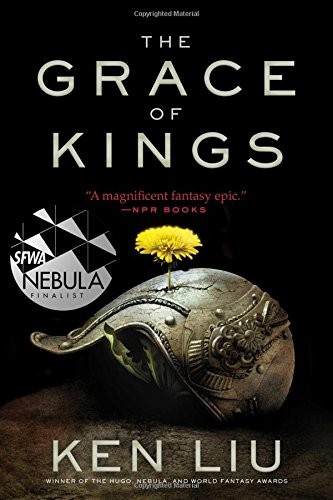
- #2The Grace of KingsKen Liu / The Dandelion Dynasty
- Best if
- you want a completed generational epic where rebellion leads into statecraft, competing political ideals, war, and the construction of a new dynasty.
- Commitment
- Long series
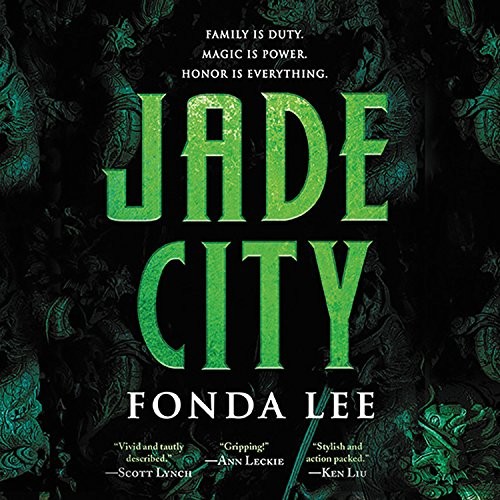
- #3Jade CityFonda Lee / The Green Bone Saga
- Best if
- you want a completed modern secondary-world saga where family loyalty, clan leadership, business, reputation, and control of magical jade are inseparable.
- Commitment
- Medium series
- #4The City of BrassS. A. Chakraborty / The Daevabad Trilogy
- Best if
- you want a magical court divided by royal power, communal discrimination, faith, inheritance, and incompatible versions of history.
- Commitment
- Medium series
- #5The Will of the ManyJames Islington / Hierarchy
- Best if
- you want fast institutional intrigue, an elite academy, an empire built on hierarchy, and a protagonist hiding his identity while investigating the system.
- Commitment
- Medium series
- #6The Goblin EmperorKatherine Addison
- Best if
- you want court politics centered on governing well, learning institutions, surviving prejudice, and building trust rather than becoming more ruthless.
- Commitment
- Single book
- #7A Shadow in SummerDaniel Abraham / The Long Price Quartet
- Best if
- you want literary political fantasy where trade, labor, personal history, and a rare form of embodied magic determine a city's future.
- Commitment
- Medium series
- #8The Dragon's PathDaniel Abraham / The Dagger and the Coin
- Best if
- you want a complete epic about banking, war, propaganda, institutional collapse, and ordinary people becoming politically important.
- Commitment
- Medium series
- #9Assassin's ApprenticeRobin Hobb / The Farseer Trilogy
- Best if
- you want court politics experienced through one emotionally vulnerable outsider whose usefulness to the crown also makes him expendable.
- Commitment
- Medium series
- #10The Poppy WarR. F. Kuang / The Poppy War
- Best if
- you want a completed dark military trilogy about empire, class, ideology, war, and the destructive relationship between personal power and political power.
- Commitment
- Medium series
- #11The Priory of the Orange TreeSamantha Shannon / The Roots of Chaos
- Best if
- you want a complete large-scale story with rival traditions, courts, religion, diplomacy, dragons, and a major romantic thread.
- Commitment
- Medium series
- #12The Cruel PrinceHolly Black / The Folk of the Air
- Best if
- you want fast young-adult faerie court intrigue driven by status, leverage, humiliation, ambition, and dangerous attraction.
- Commitment
- Medium series
- #13The Jasmine ThroneTasha Suri / The Burning Kingdoms
- Best if
- you want a completed adult epic where court captivity, rebellion, faith, empire, and a major sapphic romance all change the political stakes.
- Commitment
- Medium series
The best fantasy book with political intrigue is A Game of Thrones. Few fantasy novels make power feel so distributed, unstable, and consequential. Families, offices, marriages, debts, geography, reputation, and incomplete information all affect who can act and what each action costs. The major reservation is equally clear: A Song of Ice and Fire remains unfinished.
Choose The Grace of Kings instead for completed revolution and statecraft, Jade City for a modern family and clan saga, or The City of Brass for a magical court where contested history and communal identity drive the factions. Readers who want a faster institutional thriller should start with The Will of the Many, while The Goblin Emperor offers court politics without the usual celebration of cruelty.
This guide ranks individual entry books rather than entire series. Completion still affects the recommendation, but it does not automatically disqualify an exceptional opening volume. The order is editorial: it considers how completely politics shapes the reading experience, how distinct that experience is, how useful the book is to an adult fantasy reader, and what commitment or content tradeoffs come with it.
What counts as political intrigue in fantasy?
A fantasy book does not become political merely because it contains a king, a war, or several named countries. Political intrigue requires people and institutions to compete over power through strategy. That can involve succession, alliances, law, information, trade, propaganda, marriage, military command, religion, patronage, or control of a scarce resource.
The Fantasy Fit Matrix gives Political intrigue a score from one to five:
- 1: Power structures remain mostly outside the active story.
- 2: Institutions matter, but maneuvering is occasional or simple.
- 3: Factions and political choices materially affect the plot.
- 4: Strategy, governance, or shifting loyalties drive much of the book.
- 5: Competition for power is a primary engine, with several actors able to change the outcome.
Political intrigue is not the same as Plot complexity. The Goblin Emperor scores highly for politics because ceremony, access, obligation, and government shape almost every problem, yet its central plot is easier to follow than the five-out-of-five web of A Game of Thrones. Conversely, an intricate magical mystery can have high plot complexity while containing very little politics.
The ranking also rewards range. Twelve imitations of Westeros would not help twelve different readers. The books below include dynastic, clan, institutional, governmental, economic, military, religious, faerie-court, and romantic forms of political fantasy.
1. A Game of Thrones: the best overall political fantasy book
When King Robert Baratheon asks Eddard Stark to become Hand of the King, a personal obligation pulls the Stark family into a struggle whose participants do not agree on the rules, the history, or even the true line of succession. Elsewhere, Daenerys Targaryen enters a political marriage while carrying the claim of a defeated dynasty. Neither thread remains separate from the larger contest for power.
A Game of Thrones ranks first because politics is not a layer placed on top of the adventure. It is the cause of the adventure. A private conversation can alter an alliance; a public appointment can create enemies; a family relationship can become a military liability. Martin lets several factions act from limited information, and their plans collide without any single strategist controlling the board.
The book also distinguishes formal authority from usable power. A title matters, but so do soldiers, money, marriage prospects, geography, secrets, personal loyalty, and the willingness to violate a norm. That breadth is why the novel remains the benchmark even when later recommendations offer more focused or more original political systems.
The cost is substantial. Darkness, character focus, plot complexity, and world depth all sit at the top of the Matrix, and the story includes severe violence and sexual content. More importantly, the wider series is unfinished. Choose this book for the strongest individual political-fantasy experience; choose Jade City or The Dragon’s Path when a completed series is non-negotiable.
2. The Grace of Kings: the best completed epic of revolution and statecraft
Kuni Garu and Mata Zyndu become unlikely allies in a rebellion against the emperor of Dara. Their different backgrounds and ideas about leadership help bring down the old order, but victory exposes a harder political question: what should replace it, and who has the right to decide?
The Grace of Kings ranks second because its politics extend beyond gaining power. Military campaigns, administration, invention, legitimacy, personal loyalty, and competing theories of rule all shape the new dynasty. Gods intervene, but engineering and political organization often determine what can actually be achieved.
The novel uses a broad historical lens. That scope allows Ken Liu to show political change across islands and social levels, but it creates more distance than the close family perspective of Jade City or the first-person momentum of The Will of the Many. The four-book Dandelion Dynasty is complete and continues far beyond the initial rebellion.
Choose it when you want a political epic about both destroying an empire and living with what follows. It ranks above the other completed choices because statecraft is not a secondary layer; it is the series’ long-term subject.
3. Jade City: the best completed political family saga
On the island of Kekon, jade grants trained Green Bones unusual abilities and also anchors a social order. The Kaul family leads the No Peak clan, while the rival Mountain clan challenges its influence over the capital, the jade trade, and the future direction of the country. Family leadership and public leadership become the same problem.
Jade City is the strongest complete alternative to A Game of Thrones because its factions are credible institutions rather than decorative labels. Clan power depends on territory, business relationships, public reputation, international pressure, internal succession, and the ability to protect ordinary people who offer loyalty in return. Violence can settle an immediate dispute but worsen the political position around it.
The modern secondary-world setting changes the texture. Cars, telephones, newspapers, commerce, and international interests make this closer to a family crime saga than a medieval court chronicle. That difference is a strength: it shows how political fantasy can operate through a city and an economy without losing the tension of rival houses.
The completed Green Bone Saga follows the consequences across three main novels, giving decisions time to mature into history. Start here when family loyalty, leadership, and institutional power matter more than castles or prophecy. Avoid it when organized crime or intergenerational violence is not the political lens you want.
4. The City of Brass: the best magical-court political fantasy
Nahri survives as a con artist in eighteenth-century Cairo until she accidentally summons a djinn warrior and is taken to Daevabad. Her healing ability and uncertain ancestry place her inside a royal court where family claims, faith, communal discrimination, and memories of conquest determine who is protected and who is heard.
The City of Brass ranks fourth because its factions are rooted in different experiences of the same history. The ruling family cannot treat old violence as settled, and Nahri’s identity becomes political before she fully understands the city. High magic provides spectacle, but control of institutions and legitimacy drives the conflict.
Romance is a major thread, which makes this a less universal recommendation than the three books above it. It is also a strength for readers who want attraction and divided loyalty to complicate political judgment without becoming the sole engine of the plot. The Daevabad Trilogy is complete.
Choose it for a vivid magical city and a court where no clean account of the past can satisfy every community. Choose The Goblin Emperor for quieter government or The Cruel Prince when you want a faster YA faerie court.
5. The Will of the Many: the best fast political fantasy
Vis lives under the Catenan Republic, an empire whose Hierarchy is sustained by people ceding part of their strength, focus, and physical energy upward. He has reasons to hate the system and reasons to hide who he was before it conquered his home. Entry into an elite academy places him among future rulers while giving him a dangerous opportunity to investigate the state from within.
The political design works because the distribution of power is literal. Rank is not only social prestige; it determines who receives the accumulated Will of those below. Education, adoption, surveillance, competition, and public performance all become political instruments. Vis must understand the institution well enough to survive it without becoming visible to every faction using him.
This ranks above quieter and more literary books because it converts institutional politics into immediate momentum. Tests, rivalries, secrets, and physical danger keep the book moving while the structure of the empire remains central. It is an accessible route into political fantasy for readers who do not want to wait several hundred pages for the factions to collide.
The ongoing Hierarchy series is the main reservation. The first book opens large questions rather than closing the complete political argument, and its high magic eventually expands the experience beyond academy maneuvering. Choose it for speed and systemic intrigue; choose The Goblin Emperor for governance or The Dragon’s Path for a finished long arc.
6. The Goblin Emperor: the best hopeful court intrigue
Maia has spent most of his life isolated from the imperial court. When an accident kills his father and the heirs ahead of him, he becomes emperor without the relationships, education, or confidence that the position assumes. The people around him understand the palace better than he does, and many have reasons to direct, diminish, or remove him.
The novel is intensely political, but its central question is unusual: can someone exercise power without reproducing the cruelty that shaped him? Maia has to learn ceremony, appointments, access, investigation, marriage expectations, and the competing interests attached to public works. Kindness helps, but it does not remove the need for judgment.
That is why The Goblin Emperor ranks sixth despite lower darkness and plot complexity. It examines government, not only the acquisition of a throne. Administrative choices affect workers and families beyond the palace, while small decisions about whom the emperor hears reveal what kind of rule he intends to build.
The pace is slow, the naming system demands attention, and readers seeking battles or rapid betrayals may find the conflict too restrained. Choose it when you want political fantasy about responsibility, prejudice, and humane leadership. It is also the cleanest recommendation here for readers who want hope without removing institutional difficulty.
7. A Shadow in Summer: the best literary political fantasy
The city-state of Saraykeht depends on an andat, a concept given human form and bound by a poet. Its power makes cotton production extraordinarily efficient, turning magic into economic infrastructure. A foreign plan to break that advantage pulls a merchant house, a poet, his unwilling creation, and people with shared personal history into the same crisis.
A Shadow in Summer understands political power through trade, labor, and dependency. The central threat is not simply an assassination or an invading army. It concerns who benefits from an economic arrangement, who bears its hidden cost, and what happens when intimate loyalties interfere with national strategy.
It ranks seventh because the political experience is excellent but deliberately quiet. Abraham relies on conversation, implication, formal gestures, and painful choices more than action. Literary prose and unfamiliar social customs create more initial friction than the faster books above it.
The complete Long Price Quartet gives consequences unusual reach across time. Choose it when economics, morally complicated magic, and adult relationships sound more interesting than battlefield tactics. Its political-intrigue score is four rather than five because the intimate character drama remains at least as important as factional maneuvering.
8. The Dragon’s Path: the best politics of money and propaganda
The Dragon’s Path begins with lives that do not yet look like one political story. Cithrin is connected to a banking house and must protect its wealth from war. Marcus is a soldier trying to leave violence behind. Geder is an awkward nobleman whose humiliation and access to power produce consequences far beyond his apparent importance.
The book earns its place by treating finance, logistics, administration, and stories as forms of power. Armies require money and supply. Rulers require explanations that make their actions seem necessary. A bank can preserve possibilities that a battlefield destroys, while propaganda can turn grievance into permission.
It sits below A Shadow in Summer because the opening volume takes longer to reveal the full architecture. The distributed cast can initially feel like several separate novels, and the magic presence is low. Readers who stay with the complete five-book Dagger and the Coin series receive one of fantasy’s clearest studies of how institutions enable authoritarian power.
Choose this when you want politics to extend beyond courts and marriages into economics and public belief. It is also one of the best finished commitments on the list, but it should not be mistaken for a fast standalone thriller.
9. Assassin’s Apprentice: the best character-first court politics
Fitz is the unacknowledged son of a prince and therefore both politically inconvenient and potentially useful. Raised within Buckkeep but never fully accepted by it, he becomes vulnerable to people who can offer belonging, education, or purpose. Training as an assassin turns his uncertain place in the royal family into a tool of the crown.
Succession, legitimacy, duty, and factional pressure shape the story, but the reader experiences them through one young person’s incomplete understanding. Fitz often knows that a decision will affect him before he understands why it matters to the kingdom. This makes the politics emotionally immediate rather than strategically panoramic.
That perspective explains the ninth-place ranking. Assassin’s Apprentice has four-out-of-five political intrigue, yet its defining achievement is character focus. It does not offer the broad view of competing actors found in A Game of Thrones or Jade City. The court is a system Fitz endures before it is a game he can read.
Choose it for a slow, melancholy study of loyalty and institutional use. The Farseer Trilogy is complete, although Fitz’s wider life continues elsewhere in the Realm of the Elderlings. Readers who need fast resolutions or emotionally detached strategy should choose another entry.
10. The Poppy War: the darkest political fantasy choice
Rin earns a place at the Sinegard military academy to escape a future arranged for her. Class, regional prejudice, imperial history, and access to training define the early conflict. When war begins, those structures stop being academic and determine who commands, who is sacrificed, and what forms of power the state is willing to use.
The completed trilogy deals seriously with empire, military hierarchy, occupation, factional loyalty, revolution, and the way ideology can turn personal grievance into political catastrophe. Rin is never outside that history, even when her choices feel intensely individual.
It ranks tenth because the reading experience becomes military and catastrophic more than conventionally intrigue-driven. Strategic decisions matter, but negotiation, administration, and court maneuvering eventually give way to war, atrocity, and destructive power. This is political fantasy in consequences as much as in schemes.
No romance does not make it an emotionally safer recommendation. The series includes severe violence, trauma, and sexual-violence advisories. Choose it when you want the darkest completed series here and are prepared for its material. Do not choose it simply because you want clever betrayals in a palace.
11. The Priory of the Orange Tree: the best political standalone epic
Several regions understand dragons, religion, and history in incompatible ways. In the court of Inys, Queen Sabran’s position is tied to a dynastic belief about protection from an ancient enemy. Across the world, other characters carry secrets and traditions that complicate what any one country believes it knows.
The Priory of the Orange Tree uses courts, diplomacy, religious legitimacy, succession, and competing historical narratives to make cooperation difficult before a world-scale threat makes it necessary. The politics are not confined to one capital, and the multi-perspective structure lets the reader see why alliances cannot be formed by goodwill alone.
It ranks eleventh because politics shares the novel with high magic, dragons, mythology, and a major romantic thread. Readers seeking a pure contest for office will find the book broader than the query implies. Readers seeking a complete epic in one very large volume may consider that same breadth the main advantage.
The Roots of Chaos books share a world but tell self-contained stories, so this volume delivers an ending without requiring another installment. Choose it for political high fantasy with romance and spectacle. Choose The Goblin Emperor for tighter government or The City of Brass for a completed magical-court trilogy.
12. The Cruel Prince: the best YA court intrigue
Jude is a mortal raised in Faerie, where physical vulnerability and social contempt make status impossible to ignore. She cannot rely on magical strength, so she studies the people around power: what they want, what they hide, and which promises can be turned into leverage.
The Cruel Prince is unusually committed to court intrigue for a young-adult fantasy. Humiliation, ambition, family loyalty, secrets, and succession are not background to the relationship plot. They are the environment that creates it. Jude wants agency in a system that considers her inherently lesser, and her methods become increasingly political.
It ranks below the adult-primary books because voice, pacing, and romantic tension shape the intended experience. Romance is a major thread, and the world is less institutionally detailed than Kekon, Saraykeht, or the Catenan Republic. None of that makes the intrigue superficial; it makes the recommendation more specific.
Choose it for a fast completed trilogy, a dangerous faerie court, and attraction entangled with leverage. Readers who want an adult magical court should compare it with The City of Brass, while readers avoiding romance should move to The Poppy War or The Goblin Emperor.
13. The Jasmine Throne: the best completed romantic political epic
Malini is a princess held captive by the empire that made her politically useful, while Priya serves inside the Hirana with a secret of her own. Their alliance reaches through court ceremony, forbidden magic, religious authority, rebellion, and a world where every faction tells a different story about what liberation requires.
The Jasmine Throne earns its place because politics is not background to the relationship. Desire changes what both women are willing to risk, and their changing power affects the claims of rebels, priests, rulers, and people living under imperial violence. The completed trilogy gives those consequences room to develop instead of treating the first alliance as the final answer.
It ranks thirteenth because romance is a major thread and the emotional proximity is tighter than in the statecraft-first books above it. That makes it a more precise recommendation, not a lesser one. The world also expects readers to hold several religious and political agendas in mind before resolving them.
Choose it when you want court intrigue and rebellion with adult romance at the center of the pressure. Choose The Grace of Kings for revolution and governing at a more chronicle-like scale, or The City of Brass for a shorter completed magical-court trilogy.
Political fantasy books compared
The Politics column measures how strongly power competition, institutions, strategy, and shifting loyalties drive each book. Read it beside pace, magic, prose, romance, darkness, and commitment. Two books can both score five for political intrigue while offering entirely different experiences.
- Tone
- Political
- Pace
- Measured
- Romance
- Subplot
- Politics
- 5/5
- Darkness
- 5/5
- World
- 5/5
- Magic
- Low
- Commitment
- Long series
- Tone
- Political
- Pace
- Measured
- Romance
- Subplot
- Politics
- 5/5
- Darkness
- 4/5
- World
- 5/5
- Magic
- Medium
- Commitment
- Long series
- Tone
- Political
- Pace
- Measured
- Romance
- Subplot
- Politics
- 5/5
- Darkness
- 4/5
- World
- 5/5
- Magic
- Medium
- Commitment
- Medium series
- Tone
- Political
- Pace
- Measured
- Romance
- Major thread
- Politics
- 5/5
- Darkness
- 4/5
- World
- 5/5
- Magic
- High
- Commitment
- Medium series
- Tone
- Political
- Pace
- Fast
- Romance
- Subplot
- Politics
- 5/5
- Darkness
- 4/5
- World
- 5/5
- Magic
- High
- Commitment
- Medium series
- Tone
- Hopeful
- Pace
- Slow
- Romance
- Subplot
- Politics
- 5/5
- Darkness
- 2/5
- World
- 5/5
- Magic
- Low
- Commitment
- Single book
- Tone
- Melancholic
- Pace
- Slow
- Romance
- Subplot
- Politics
- 4/5
- Darkness
- 3/5
- World
- 4/5
- Magic
- Medium
- Commitment
- Medium series
- Tone
- Political
- Pace
- Measured
- Romance
- Subplot
- Politics
- 4/5
- Darkness
- 4/5
- World
- 4/5
- Magic
- Low
- Commitment
- Medium series
- Tone
- Melancholic
- Pace
- Slow
- Romance
- Subplot
- Politics
- 4/5
- Darkness
- 4/5
- World
- 4/5
- Magic
- Medium
- Commitment
- Medium series
- Tone
- Grim
- Pace
- Fast
- Romance
- None
- Politics
- 4/5
- Darkness
- 5/5
- World
- 4/5
- Magic
- High
- Commitment
- Medium series
- Tone
- Mythic
- Pace
- Measured
- Romance
- Major thread
- Politics
- 4/5
- Darkness
- 3/5
- World
- 5/5
- Magic
- High
- Commitment
- Medium series
- Tone
- Political
- Pace
- Fast
- Romance
- Major thread
- Politics
- 5/5
- Darkness
- 4/5
- World
- 3/5
- Magic
- High
- Commitment
- Medium series
- Tone
- Political
- Pace
- Measured
- Romance
- Major thread
- Politics
- 5/5
- Darkness
- 4/5
- World
- 5/5
- Magic
- High
- Commitment
- Medium series
Choose by the kind of politics you want
- For dynastic conflict and rival houses: choose A Game of Thrones.
- For revolution, statecraft, and a completed generational epic: choose The Grace of Kings.
- For a completed clan and family saga: choose Jade City.
- For a magical court divided by history and identity: choose The City of Brass.
- For an academy inside a hierarchical empire: choose The Will of the Many.
- For hopeful government and court ceremony: choose The Goblin Emperor.
- For trade, labor, and literary character drama: choose A Shadow in Summer.
- For banking, propaganda, and a completed epic: choose The Dragon’s Path.
- For court politics through one vulnerable insider: choose Assassin’s Apprentice.
- For war, empire, and the darkest consequences: choose The Poppy War.
- For diplomacy, religion, dragons, and a complete large story: choose The Priory of the Orange Tree.
- For fast YA faerie-court intrigue: choose The Cruel Prince.
- For a completed adult imperial fantasy with a major sapphic romance: choose The Jasmine Throne.
Frequently asked questions
What is the best fantasy book with political intrigue?
A Game of Thrones is the strongest overall answer because political decisions drive the story across several credible factions, and power depends on far more than formal titles. Its major disadvantage is that the wider series remains unfinished. Choose The Grace of Kings when completion matters more and you want politics at generational scale.
What is the best completed political fantasy series?
The Dandelion Dynasty, beginning with The Grace of Kings, is the broadest completed political epic here, following revolution, statecraft, war, and generational change. The Green Bone Saga is the stronger choice when you want a closer family focus, while The Dagger and the Coin emphasizes finance and propaganda.
Which political fantasy book is the most hopeful?
The Goblin Emperor is the clearest hopeful choice. It does not pretend that kindness solves every political problem, but it asks whether empathy, attention, and responsible government can create power that is not based entirely on fear.
Which fantasy books have political intrigue but little or no romance?
The Poppy War has no conventional romance plot, but it contains severe violence and sexual-trauma advisories. The Goblin Emperor, A Game of Thrones, Jade City, A Shadow in Summer, and The Dragon’s Path use romance as a subplot rather than the central engine. Check the Matrix snapshot for the exact role in each individual book.
What should I read after A Game of Thrones for more politics?
Choose The Grace of Kings for revolution and statecraft, Jade City for rival families, or The Dragon’s Path for finance and propaganda. The Goblin Emperor offers a more hopeful view of government, while The Will of the Many is the strongest faster option despite its ongoing series.
Are court intrigue and political fantasy the same thing?
No. Court intrigue is one form of political fantasy, usually centered on access to a ruler, succession, marriage, patronage, and palace factions. Political fantasy can also operate through clans, banks, schools, armies, religions, trade routes, propaganda, or revolutionary movements. Jade City and The Dragon’s Path are political without depending on a single royal court.
Which political fantasy books make romance important?
The City of Brass, The Cruel Prince, and The Priory of the Orange Tree all use romance as a major thread rather than the sole genre. Choose The City of Brass for adult magical-court politics, The Cruel Prince for faster YA maneuvering, or Priory when diplomacy and romance should sit inside a large standalone epic.
Which political fantasy is easiest to start?
The Will of the Many is the fastest and most accessible entry among the top recommendations. The Cruel Prince also moves quickly but makes romance more important. The Goblin Emperor is structurally clear but slower and more demanding at the sentence and naming level.
Where should you start?
Start with A Game of Thrones when you want the benchmark and can accept an unfinished series. Start with The Grace of Kings for a completed epic of revolution and statecraft, Jade City for family and clan power, or The Will of the Many when pace matters most.
The decisive question is not simply how much politics a fantasy book contains. It is what kind of power you want to watch: inherited, earned, administered, financed, narrated, militarized, or negotiated through intimacy. Once that choice is clear, the ranking becomes a set of routes rather than one universal ladder.
Sources and reviewThe review status, confidence level, and sources behind this guide.
Matrix v1.0 / reviewed / high confidence / reviewed August 14, 2026
- Tasha Suri: The Burning Kingdoms
- George R. R. Martin: bibliography
- Simon & Schuster: The Grace of Kings
- Fonda Lee: Jade City
- S. A. Chakraborty official books
- Simon & Schuster: The Will of the Many
- Macmillan: The Goblin Emperor
- Macmillan: A Shadow in Summer
- Hachette: The Dragon's Path
- Robin Hobb: works
- R. F. Kuang: author and books
- Samantha Shannon: Roots of Chaos
- Little, Brown: The Cruel Prince